1 min read
Walk-In Cooler & Freezer Doors: Size, Shape, Construction, and Customization
When it comes to cold storage solutions, choosing the right walk-in door is critical for efficiency, durability, and performance. Whether you’re...
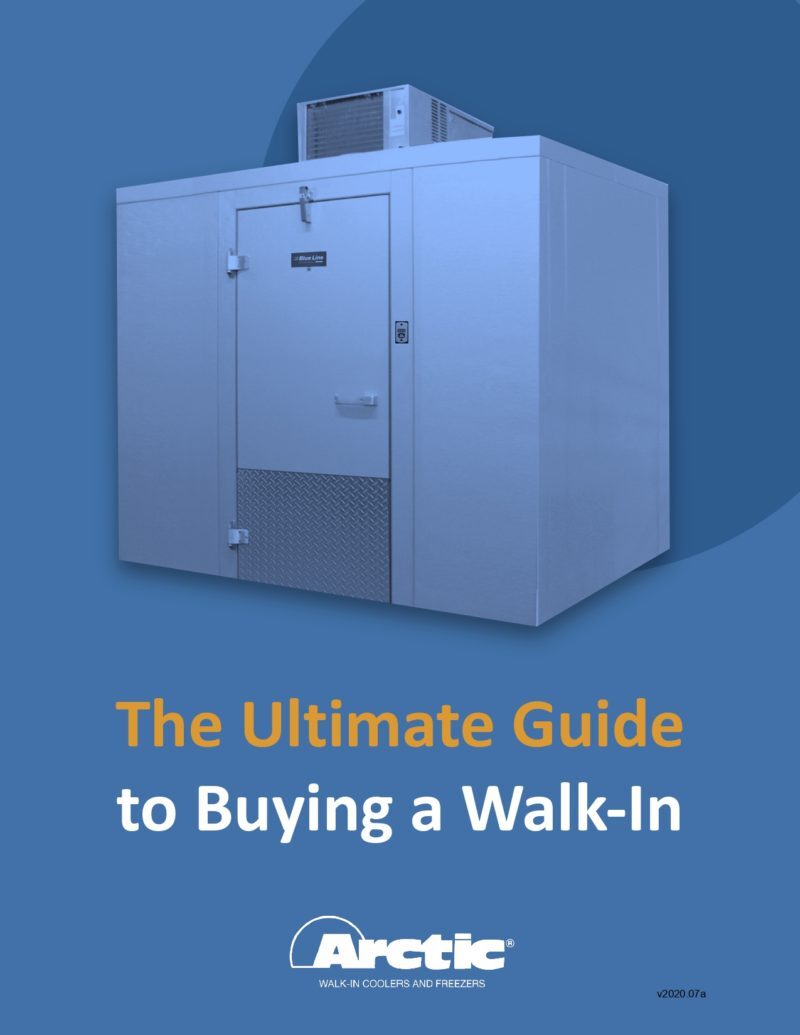
A walk-in cooler or freezer can be one of the largest upgrade purchases your business makes. Choosing the right unit that fulfills your needs and meets your budget is vital. While the important factors to consider may be complicated, they don’t have to be confusing. Let’s take a look at the key considerations, components, and accessories that will help ensure the perfect fit for your business.
There are many factors that go into choosing a refrigeration unit. Several of the biggest decisions should be made before you dive into the specific details of the individual components of the box. First, understand what type of refrigeration you need, how much space you’ll require, and where to locate your unit.
The first decision to be made is what kind of storage you’ll need – and at what temperature. The industry standards for coolers and freezers are typically 35° F and -10° F, respectively. Which kind of storage you’ll need will depend on the usage of the unit, or what specific products you will be storing and for what length of time. Do you need to store dairy products? Medical Supplies? Prepared foods? Flowers? Fresh baked goods? Depending on your business, you may need both a cooler and a freezer. Thankfully, both of these needs can be met with a custom combination walk-in with two or more compartments for cooling or freezing.
Takeaway: Your business model will dictate your specific needs, so start by understanding your menu and what items you need to keep cold, and at what temperature.
How much space do you need? The specific requirements for your business will vary depending on several factors. First, consider the maximum amount of space you will need during peak times. Your storage capacity will have to accommodate your needs during your business’s busy season while not being overly large. This is because operating costs generally increase as the size of the unit increases.
Second, consider the type of items you will be storing. What products you need to store is relevant because it will affect how your unit is laid out, and there are many items to consider. For example, the necessity to store fresh food will most likely increase your space requirements.
Next, consider how often you will receive deliveries. For example, if you receive daily deliveries, you may only need a few cubic feet of storage since you’ll be clearing out your product daily. On the other hand, if you receive products twice a month, you may require much more square footage in order to have enough space for all of the goods you need for multiple weeks. The frequency of delivery will be a determining factor in your space requirements.
Lastly, you should factor growth into your cooler or freezer calculations. Does your business have plans to expand in the short or mid-term? The cost of a slightly larger space now will almost certainly be less than purchasing another unit in the near future.
Takeaway: You need enough space for your product at your busiest times – an overstuffed cooler is an inefficient cooler. Your peak storage needs will depend on your menu, frequency of delivery, and future growth.
Your walk-in unit can be placed either inside or outside of your building. There are many factors to consider when trying to make this decision.
Indoors, there are several requirements to think about. For indoor installations, every unit will require 2” of space between the walk-in and surrounding walls for a proper ‘air gap’. Next, you’ll need to consider the floor. Most walk-in freezers will require an insulated floor. Walk-in coolers can be floorless if they are on-grade (on a cement floor).
When considering placing a unit outside, the exact location in relation to building access is vital. Depending on the frequency of cooler access, you may want to place your unit close to your operating space, where business activities involving the product in your walk-in occur. This may or may not be possible outside, depending on your property and building layout. Additionally, consider local building ordinances, building codes, and engineering requirements. Depending on your locality, there may be requirements for size, distance from the building, finish, snow load, etc. that you need to be aware of before installing your unit.
You should also consider the added requirements for a unit outside. These units require several other accessories, namely a condensing unit cover, membrane roof, and a rain gutter over the door. These are in addition to general weather-proofing that will be specific to your climate, such as sloped ceilings for snow. Also, keep in mind that outdoor units generally require a floor.
Takeaway: You need to have the physical space to house your cooler. This can be either inside or outside. Housing your unit inside may provide easier access, while housing your cooler outside may allow for a larger amount of storage.
Great! Now you understand what type of unit you need, how much storage space you should plan to have, and where to locate your cooler. Next, we need to dive into some of the specific features of your unit.
Most walk-ins are manufactured with interlocking panels: floors, walls, doors, and ceilings. The panels are what actually insulate the cooler. Their construction is generally the same – insulating foam sandwiched between sheets of metal.
Generally, panels that are better at retaining cold inside the unit have a higher ‘R-value’. R-Value is a measure of an insulation’s ability to reduce the rate of heat flow. Essentially, R-value describes the ability of the panel to stop the transfer of heat from the outside to the inside. All walk-in panels must meet specific R-value requirements in order to be compliant with building codes and energy efficiency regulations – a minimum of R-25 for coolers and R-32 for freezers.
Usually, as the R-value of a panel increases, so does the cost. High-quality panels will all exhibit some of the same characteristics: high level of fire retardation, meeting required energy efficiency standards (like EISA), and utilizing materials that are food-safe. There are many different technical specifications concerning panels that may affect your decision-making process, so ask your dealer or manufacturer for specific details.
Takeaway: Panels are essentially insulation sandwiches. The specific type of panel you need will depend on the desired temperature of your unit. Having a basic knowledge of R-value will help you understand the industry-specific language your dealer may use.
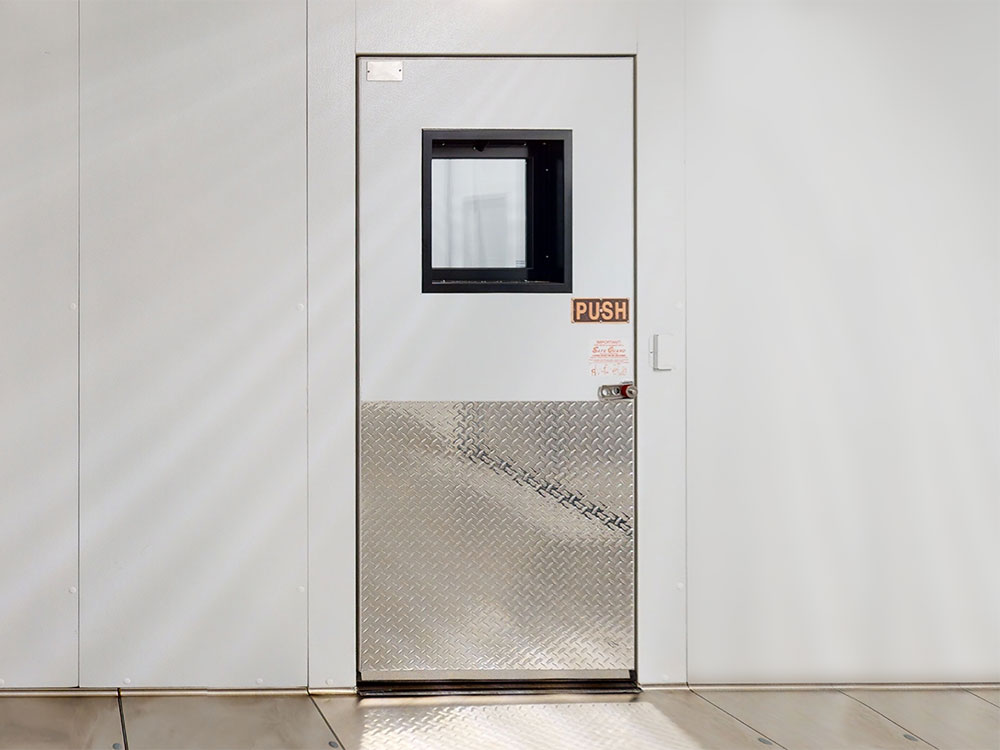
First, your unit may need a standard personnel swing door. They typically measure 34” x 78” and employ a latch-style closure. This is the right choice if the frequency of door openings will be low to medium – the industry standard is 2-3 opens per hour. While this door system will take the most time to open and close, it is the most energy-efficient.
Next, especially if you need more clearance, sliding doors may be the right choice. These can offer larger entries than standard swing doors and be either manual or electric. Lastly, roll-up garage-style doors are ideal if your cooler is large and you receive large deliveries frequently.
Takeaway: The type of door you require will depend largely on what type and how much product is coming into your unit. Larger deliveries on larger dollies or pallets may require sliding or roll-up doors.
Industry-standard finishes are galvanized steel, aluminum, and stainless steel for walls and ceilings. They come with either a smooth or an embossed finish and are generally metallic gray or white in color. Floors must meet sanitation requirements (NSF STD 7), which call for an aluminum or stainless steel interior floor finish with the proper covering radius.
However, if your cooler or freezer is located where customers can see it, you may want to consider a custom finish for the entire unit or just the customer-facing doors and walls. There are many reasons to consider adding a finish: the look can complement your restaurant’s front end and offer a unique customer experience.
The types of special finishes you can choose to incorporate are varied. Depending on your walk-in manufacturer, you may be able to select from a wide variety of patterns, colors, vinyl finishes, matched colors, and paint grips. However, industry-standard finishes include: galvanized steel, aluminum, and stainless steel on walls and ceilings. They can come with either a smooth finish or an embossed finish, in gray or white. For the floor, NSF STD 7 requires aluminum or stainless steel, so choices are more limited.
Takeaway: Consider a special finish to ensure your unit complements your space and reinforces your brand.
Choosing the right flooring for your walk-in cooler or freezer is crucial. The flooring must be durable, easy to clean, and suitable for maintaining temperature and hygiene. Common flooring options include:
Takeaway: The flooring choice is a vital component of your walk-in cooler or freezer, impacting energy efficiency, safety, and maintenance. Choose a flooring option that fits your specific needs and usage requirements.
When selecting a refrigeration unit, consider the type of system that will best suit your operational needs. There are two main types of refrigeration systems:
Takeaway: The type of refrigeration system you choose should align with the size and use of your walk-in unit, as well as your preferences for maintenance and noise levels.
Proper sizing of the refrigeration unit is essential to ensure efficient operation. Undersized units will struggle to maintain temperature, while oversized units can lead to increased energy costs and frequent cycling. Factors to consider when sizing your refrigeration unit include:
Takeaway: Accurately sizing your refrigeration unit is critical for maintaining optimal temperatures and maximizing energy efficiency.
The placement of the condensing unit is another key consideration. The unit should be located in a shaded area, away from direct sunlight and other heat sources, to maximize efficiency. Additionally, ensure there is enough airflow around the unit for proper operation.
Takeaway: Properly locating the condensing unit will enhance the efficiency and longevity of your walk-in refrigeration system.
A variety of accessories can enhance the functionality and efficiency of your walk-in cooler or freezer:
Takeaway: The right accessories can significantly improve the usability and efficiency of your walk-in cooler or freezer.
Regular maintenance is essential to keep your walk-in unit operating efficiently. Key maintenance practices include:
Takeaway: Routine maintenance will prolong the life of your walk-in unit and maintain optimal performance.
Arctic offers a wide range of walk-in coolers and freezers, designed to meet diverse operational requirements across industries. Here’s an overview of their key product lines:
Walk-in coolers and freezers from Arctic serve a multitude of industries, each with unique needs and specifications. Here are some key applications:
Choosing a walk-in cooler or freezer is a significant investment that requires careful consideration of various factors. By understanding your specific needs, exploring available options, and planning for future growth, you can select the right unit to ensure your business’s success.
1 min read
When it comes to cold storage solutions, choosing the right walk-in door is critical for efficiency, durability, and performance. Whether you’re...
1 min read
Compliance should not be treated as a box to check. It’s the backbone of food safety, employee safety, and business continuity. Health inspectors...
1 min read
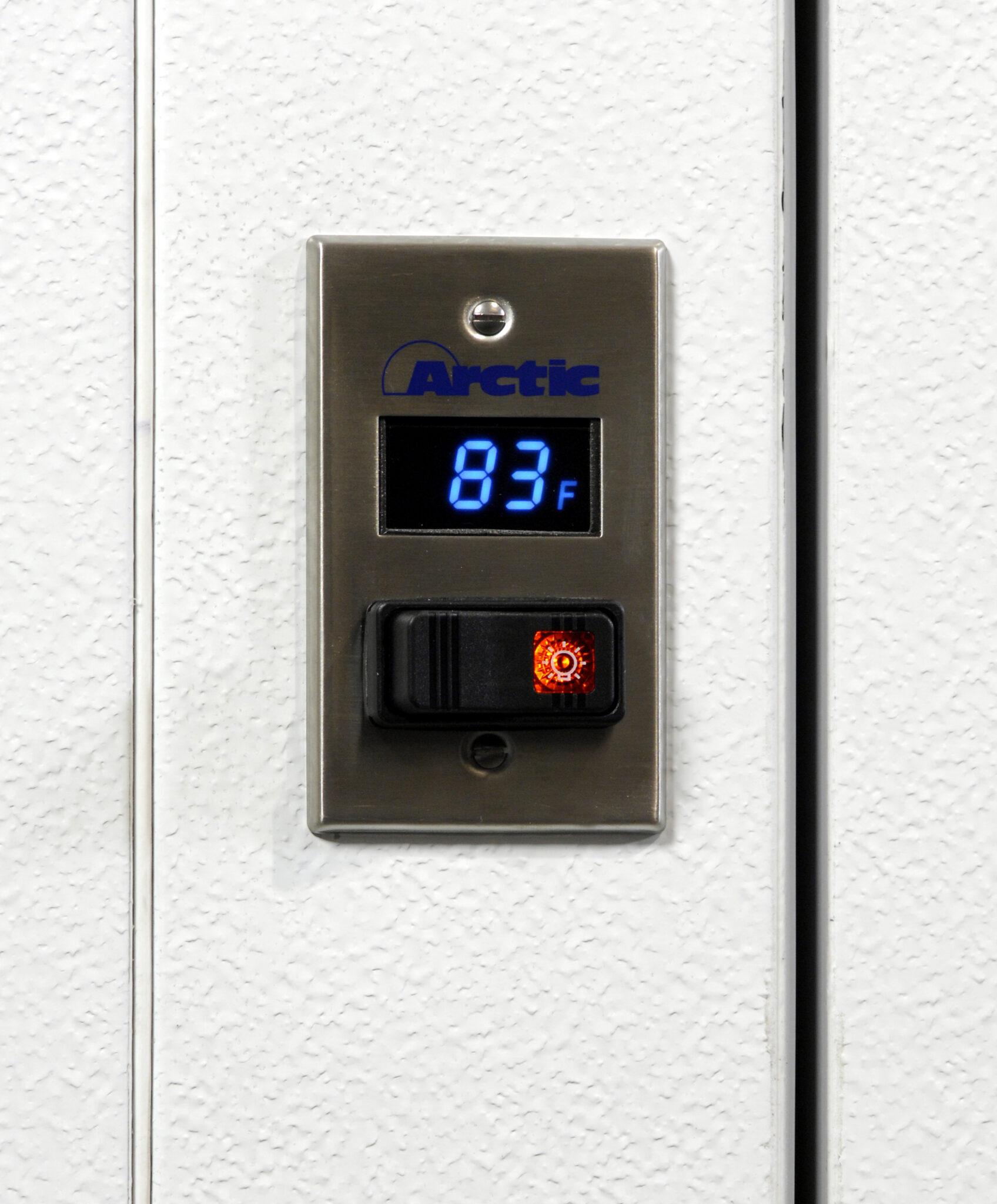
The temperature of your walk-in cooler or freezer is critical to maintaining product quality and safety. Whether you’re storing perishable food,...