1 min read
Refrigeration Regulation is heating up, Arctic will keep you cool!
Effective Jan 1, 2025, manufacturers of Self-Contained refrigeration equipment are required to provide new equipment using environmentally...
6 min read
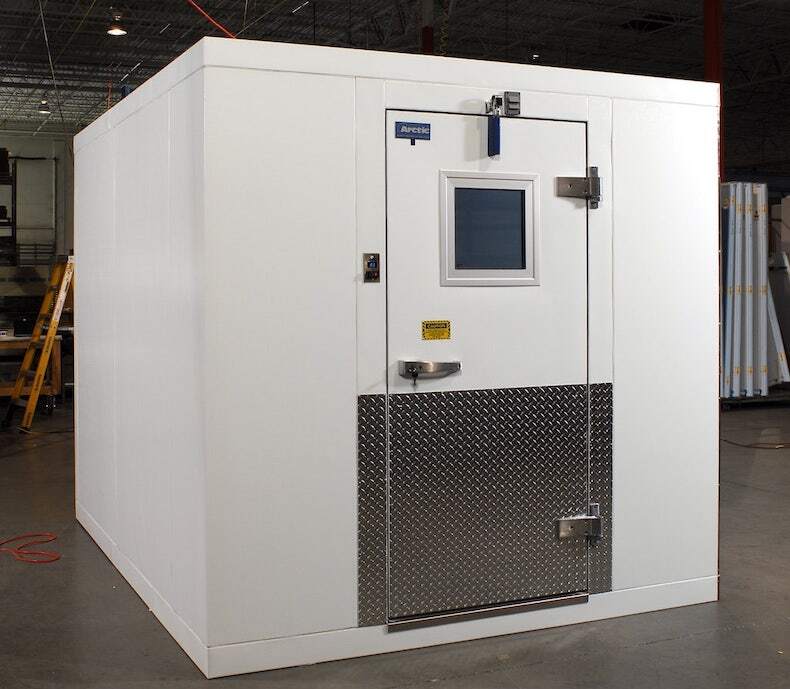
Changes of seismic proportions are coming to the cold storage industry and they are not related to Arctic’s recently introduced Arctic Atlas ™ seismic reinforced line of walk-ins coolers and freezers. These upcoming changes stem from programs and regulations put in place to reduce energy consumption and curb greenhouse gas emissions.
As a premium walk-in manufacturer with a Customer First focus, Arctic is proactively educating its customers about these upcoming changes. Arctic’s solid and longstanding partnership with the largest and most prominent refrigeration manufacturers in the industry provides a unique perspective of the regulatory landscape and clear understanding of how these upcoming changes will impact the walk-in cooler and freezer industry.
With roots stretching back to the 60’s, the Clean Air Act (CAA) was implemented in the 70’s and drastically amended in the 90’s. The CAA gave formation to the Environmental Protection Agency (EPA), a Federal agency of the United States government with the mission to protect human health and the environment.
In 1994, under Section 612 of the CAA, the EPA established the Significant New Alternatives Policy (SNAP) program. This program identifies and evaluates substitutes for ozone-depleting substances (ODS). It does so by evaluating the risks to human health and the environment from existing and new substances, publishing lists and promoting the use of acceptable substances.
The American Innovation and Manufacturing Act (AIM) was enacted on 2020, and it authorizes the EPA to address hydrofluorocarbons (HFCs) by providing new authorities in three main areas:
Phasedown of HFCs started in 2022. Under the AIM Act, the number of HFC production and consumption allowances will decrease to 15% of historic baseline levels by 2036.

Some States may begin enforcing additional and sometimes stricter regulations than the ones federally mandated by the EPA
Chlorofluorocarbon (CFC) refrigerants were the first big group of commercially available refrigerants to provide a safer non-toxic alternative to ammonia & chloromethane. It was later discovered that CFCs are ozone depleting substances due to their chlorine components. CFCs started being phased out and banned in the mid 90’s. These refrigerants are no longer used in refrigeration equipment. R-12, a common CFC, was known as FREON – the term we are accustomed to hearing when people use it to refer to all refrigerants.
Hydrofluorocarbons (HFCs) were the replacement to CFCs. Their ozone depletion potential (ODP) is lower but unfortunately their global warming potential (GWP) is high. R-134A and R-404A are common HFC refrigerants.
Large refrigerant manufacturers like Chemours and Honeywell announce they will not be making or supplying R-404 (a common HFC) after they run out of inventory
Hydrofluoroolefins (HFOs) were developed to replace older refrigerants with high GWP and ODP. HFOs have a much lower GWP than older refrigerants and zero ODP. Most commercial refrigeration equipment in 2024 is manufactured using R-448A/R-449A.
HFCs and HFO blends containing HFCs are the family of refrigerants that are currently being phased out and will be banned from use in new equipment.
A2L Refrigerants are named for their ASHRAE safety classification:
A2L refrigerants are characterized by mild flammability, low toxicity, and low GWP. The primary benefit of A2Ls is their ultra-low GWP level. When compared to a popular refrigerant like R134a, an A2L refrigerant like R1234yf offers up to 99% reduction in GWP. As their physical properties are similar to HFC refrigerants, they’re also relatively easy to use and don’t add any system complexity. Being classed as “mildly flammable”, A2L refrigerants are a safe option for most refrigeration applications since they are difficult to ignite. A2L refrigerants have been in development for many years and products that use them already exist in Europe, the US is catching up with the use of A2Ls.
A2L refrigerants are EPA’s proposed alternatives to replace HFCs. They will become the default refrigerant specified in walk-in coolers & freezers equipment going forward.


A key component of the new regulations is the definition given by the EPA to refrigeration equipment.
A product is functional upon leaving a factory. Examples of products include window air conditioning units, refrigerators, self-contained refrigeration units and stand-alone ice machines.
A condensing unit is not a product for purposes of the Technology Transitions Program. It is a component. Whether it is pre-charged or field charged, it must be connected to an evaporator to serve its intended purpose.
Basically, if you need an HVACR technician to assemble and/or charge with refrigerant, it’s not a product.
The EPA is restricting the sale, distribution, and export of products containing higher-GWP HFCs three years after the manufacture/import restriction dates.
A system is assembled from multiple components and charged on site. Examples include supermarkets with a centralized compressor room, remote refrigeration systems and mini-split air conditioners. Components include equipment such as compressors, condensers, and display cabinets.
Generally speaking, if you need an HVACR technician to assemble and/or charge with refrigerant, it’s a system.
The EPA is not restricting the manufacture, import, sale, distribution, or export of components that are used to repair existing refrigeration, air conditioning and heat pump systems (RACHP).
Tracking and understanding the new regulations can be complicated and overwhelming. The best way to understand how these changes will affect the walk-in cooler and freezer industry is through dates of compliance depending on the applicable sector and type of equipment.
Starting as soon as January 1, 2025, restrictions will take effect on the use of higher-GWP HFCs in new 1) aerosols, 2) foams, and 3) refrigeration, air conditioning, and heat pump equipment.
The rule prohibits the installation of new refrigeration systems that use higher-GWP HFCs starting in Jan. 2026 or 2027 depending on the sector.

New Self-contained refrigeration equipment that uses higher GWP (HFCs) cannot be manufactured after Dec. 31, 2024. They can continue to be sold and installed until Dec. 31, 2027.
New remote refrigeration equipment that uses higher GWP (HFCs) cannot be manufactured or sold for new system installations on retail food and cold storage warehouse applications after Dec. 31, 2025.
Market availability
Economic factors
Equipment certification & labeling
Installation
Existing Systems
In 2025, significant changes in refrigeration regulation are set to take effect, aimed at reducing environmental impact and promoting energy efficiency.
Refrigeration equipment manufacturers have been working diligently during the last few years to ensure a smooth transition with little to no disruption in product availability and components. Their research and development teams have worked tirelessly to find the best balance between compliance and affordability. They have put in place educational resources and have been actively educating installers, contractors, and customers alike through available seminars and training courses.
Arctic and its refrigeration equipment manufacturer partners are committed to providing their customers with up-to-date information on the current regulation changes. This article covers an overview of the refrigeration landscape pertaining to the walk-in cooler and freezer industry. The scope of the new rule is broad and should be studied in depth. Arctic encourages its customers to familiarize themselves with the new regulations. The EPA’s website (linked on the references) has extensive resources available to educate the public about the upcoming changes. Arctic encourages its customers to reach out to local authorities and refrigeration contractors to discuss the upcoming federal regulations the are going into effect and how they will impact upcoming projects.
1 min read
Effective Jan 1, 2025, manufacturers of Self-Contained refrigeration equipment are required to provide new equipment using environmentally...
1 min read
When your walk-in cooler goes down, every hour counts. Spoiled inventory, lost revenue, and disrupted operations can cost thousands of dollars in a...
1 min read
Choosing between an outdoor or indoor walk-in cooler or freezer can significantly impact your business operations, efficiency, and costs. In this...